

_
_
On September 7, 2017, KVB Kunlun International, together with ifeng.com and Phoenix Television, jointly hosted the high-end financial forum "Riding the Waves: Cross-Border E-Commerce Sets Sail Again in the New Exchange Rate Era." Distinguished guests Andy Xie, Guan Tao, and Ouyang Cheng gathered at the Phoenix Center in Beijing, with the event attracting over a hundred corporate executives and dozens of authoritative media outlets.
Notably, the event was livestreamed in its entirety via the Phoenix News client, successfully drawing 250,000 viewers watching simultaneously on the online platform! It became one of the most well-attended, most influential, and most industry-instructive cross-border e-commerce forums in recent years.
Forum host Zeng Jingyi interacting with the audience
Hitting the Intersection and Pain Points of Foreign Exchange and E-Commerce! Multi-Faceted Deliberation Across Policy, Economy, and Industry
The vigorous development of the "Belt and Road" strategy and China's cross-border e-commerce striding into overseas markets have made exchange rates, e-commerce, and imports and exports a focus of attention. On August 11, 2015, the central bank announced improvements to the RMB-to-USD central parity quotation mechanism. Following the official implementation of exchange rate reform and the RMB's inclusion in a basket of currencies, the RMB's two-way fluctuation range widened, and significant exchange rate volatility spells enormous risk for import and export enterprises. The recent appreciation of the RMB exchange rate, as well as fluctuations in the USD exchange rate, have also affected the business strategies of Chinese import and export enterprises, especially cross-border e-commerce companies. Therefore, how to accelerate capital turnover, reduce operating costs, and hedge exchange rate risk has become a crucial part of preserving the fruits of profit for cross-border e-commerce.

The themed forum "Riding the Waves: Cross-Border E-Commerce Sets Sail Again in the New Exchange Rate Era" emerged in response. On the financial policy level, it explored the future direction of exchange rate reform; on the macroeconomic level, it analyzed the trends of RMB internationalization and the pain points and survival strategies of entrepreneurs amid the cross-border e-commerce wave. The forum integrated hot topics in foreign exchange and e-commerce, helping enterprises formulate response strategies and offering advice for the future of cross-border e-commerce.
KVB Kunlun International Executive Director and CEO Liu Xinnuo delivering the opening remarks
ifeng.com Joins Hands with KVB Kunlun International to Safeguard State-Owned Enterprises Going Global

At this forum, Mr. Liu Shuang, CEO of ifeng.com, COO of Phoenix Television, and Chairman of Yidian Zixun, stated in his remarks that as an industry representing China's new development momentum, cross-border e-commerce faces a series of turbulent risks in the new exchange rate era. He said it was a great honor to invite distinguished guests from the political, business, and academic circles to jointly explore the near-term strategies and long-term visions of foreign exchange management for cross-border e-commerce from multiple approaches and perspectives. This collaboration between ifeng.com and KVB Kunlun International aims to help cross-border e-commerce enterprises affected by exchange rate reform clarify their thinking, hedge risks, and set sail once again, contributing to the "Belt and Road" initiative—a truly significant endeavor.
The RMB Won't Keep Falling—Is a "Turning Point" for a Rebound at Hand?
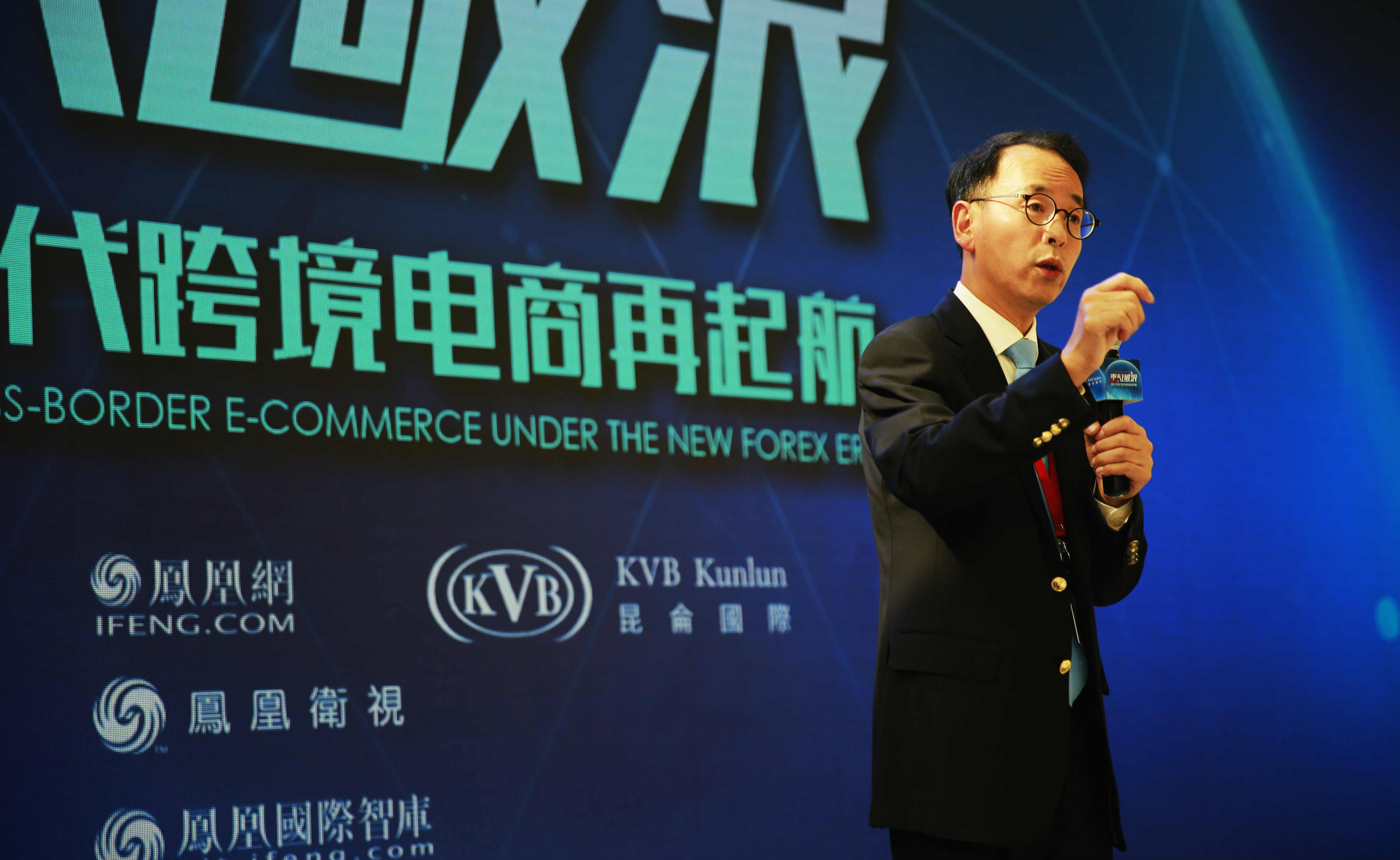
Independent economist and former Managing Director of Morgan Stanley Asia's Research Department, Mr. Andy Xie, shared his unique insights on exchange rates and the economy. Xie believes the RMB exchange rate is currently at a very low level. However, in the long run, provided certain conditions are met, the RMB still has enormous room to appreciate, so business people should pay greater attention to the arrival of this turning point.
Cross-Border Capital Flow Management Will Not Become a "Roadblock" to RMB Internationalization
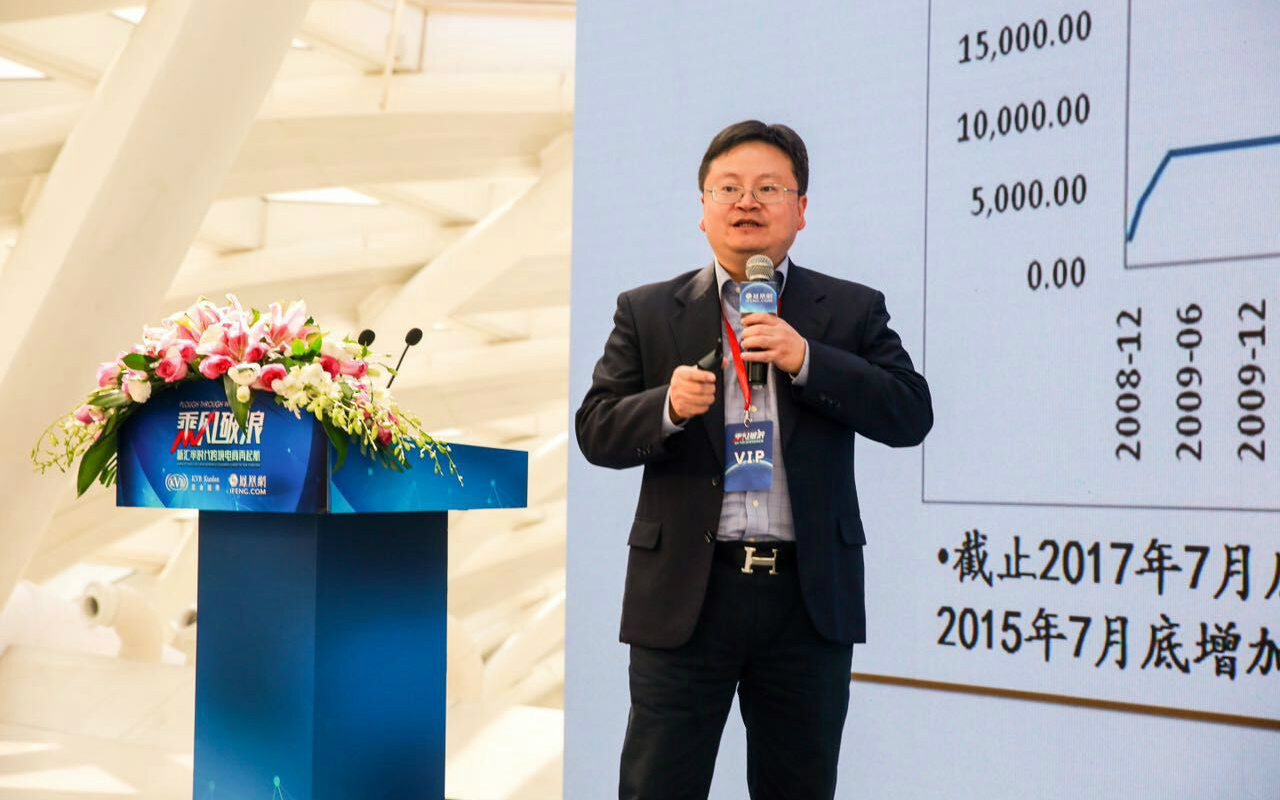
Guan Tao, Senior Research Fellow at the China Finance 40 Forum and former Director-General of the Balance of Payments Department of the State Administration of Foreign Exchange, objectively analyzed the changing trends and policy measures in the phased process of RMB internationalization. He emphasized that strengthening the management of capital flows does not equate to a retreat in financial openness, and can ultimately achieve a win-win outcome for both the market and the government. RMB internationalization is inseparable from the internationalization of the market, and the marketization of the RMB exchange rate is the necessary path to RMB internationalization; the current measures to maintain exchange rate stability should not be treated as long-term instruments.
In the "Digital Economy Era," Cross-Border E-Commerce Will Become the Mainstream Form of International Trade

Ouyang Cheng, Director of the Alibaba Cross-Border E-Commerce Research Center and Senior Expert at the Alibaba Research Institute, stated in his speech that the core value of cross-border e-commerce is driving the transformation and upgrading of Chinese industry, becoming a new engine and new business format for national economic growth. From now into the future, it will be the mainstream era of the digital economy and digital enterprises. China's enormous market and its special foundation as the "world's factory" will become a uniquely advantageous driving force for cross-border e-commerce. In the future, B2C will become one of the two mainstream forms of international trade, and supporting service ecosystems and credit guarantee systems will gradually develop and improve.
Refined and Risk-Controlled Development Is the Direction China's Cross-Border E-Commerce Aspires To

Li Zhiqiang, CFO of the renowned e-commerce enterprise Youkeshu, shared in his experience that we are currently going through the 4.0 era of cross-border e-commerce, where the operational complexity of a cross-border e-commerce enterprise is no different from that of a mini multinational corporation. The management pressure and difficulty of cross-border e-commerce today are enormous, making it all the more urgent to lead the entire industry toward refined development, continuously improving operational, risk-control, and profit-generating capabilities. Encouragingly, the vast market that cross-border e-commerce commands will bring more opportunities to "Made in China," allowing us to sell China's competitive products around the world.
Being the Navigator and Escort for Cross-Border E-Commerce

Zheng Xiaorong, Global Trading Director of KVB Kunlun International, noted in his remarks that under today's complex circumstances—with the rollout of the "going global" policy, drastic volatility in international financial markets, and fierce competition among e-commerce enterprises—managers of cross-border e-commerce and import and export enterprises should strategically address foreign exchange management and hedging issues. As a provider of foreign exchange solutions, KVB Kunlun International has launched a 5×24 round-the-clock trading system to help cross-border e-commerce achieve global transaction settlement. As the navigator and escort of cross-border e-commerce, KVB Kunlun International will help more enterprises seize the high ground in global expansion and effectively hedge potential risks.
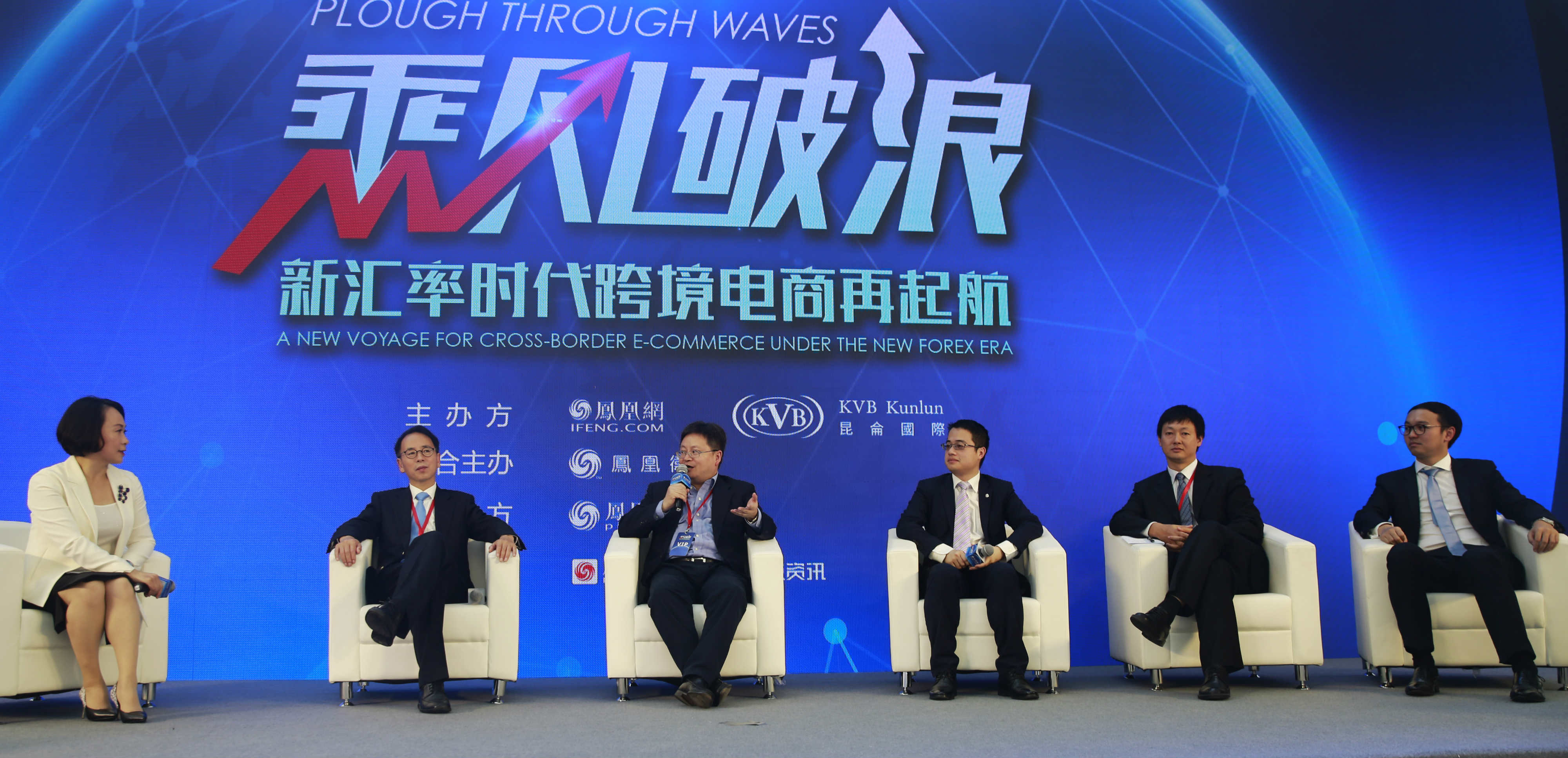

Sparks Flew at the Roundtable Forum as the Audience Eagerly Raised Questions
KVB Kunlun International combines multiple roles as a corporate foreign exchange management advisor and a financial IT solutions provider, and has long been committed to providing cross-domain, cross-regional comprehensive financial products and services to individual and corporate clients worldwide. Among these, KVB Kunlun International's international settlement business innovatively supports efficient settlement in 129 different global currencies, covering the currencies of all countries along the "Belt and Road," aiming to provide cross-border e-commerce enterprises with more convenient and rapid global settlement services.
The successful hosting of this cross-border e-commerce forum brought us a splendid feast of ideas. Through it, we hope that cross-border e-commerce and all enterprises about to go global can leverage the soft power of foreign exchange and management to set sail once again and continue exploring new chapters.
