

_
_
As we enter 2016, amid China's economic restructuring and slowing GDP growth, the market is filled with numerous crisis theories about the Chinese economy. Some voices believe China's economy is heading into a harsh winter, but do we really need to be so pessimistic?
At the dawn of the 2016 Lunar New Year, Mr. Liu Xinnuo, CEO of KVB Kunlun International, was invited to appear on the "First Reception Room" program of Asia Pacific's OneTV in his capacity as CEO of a Hong Kong-listed financial company. As a seasoned leader of a Chinese-funded foreign exchange financial institution, Mr. Liu Xinnuo shared unique insights during this dialogue on current hot topics — the renminbi's inclusion in the SDR, continued exchange rate volatility, the ups and downs of global stock markets, and even the broader environment of the 2016 global financial markets. We believe it will offer you a different kind of inspiration.
This article draws on the views expressed by Mr. Liu Xinnuo, CEO of KVB Kunlun International, in a media interview, providing an accessible analysis of how enterprises should respond to the 2016 global economic adjustment and the significant volatility in the exchange rate market.

Markets Have Cycles — Opportunities and Challenges Coexist
Experienced entrepreneurs will discover, from the financial crises and adjustments of various countries, that every economy has its own development cycle — some spanning seven or eight years, others five or six. Rather than calling the current Chinese economy a "recession," it is more accurate to say it is entering a normal cycle of economic adjustment, where certain problems arise at certain stages. Just as an ordinary person sleeps when tired and works when awake — itself a natural cycle — people have cycles and nature has cycles, so why wouldn't markets and economies have cycles? Faced with such changes, enterprises should actively adapt, make the right adjustments in line with the trend, do well what they should do, and simply be ready to embrace future challenges.
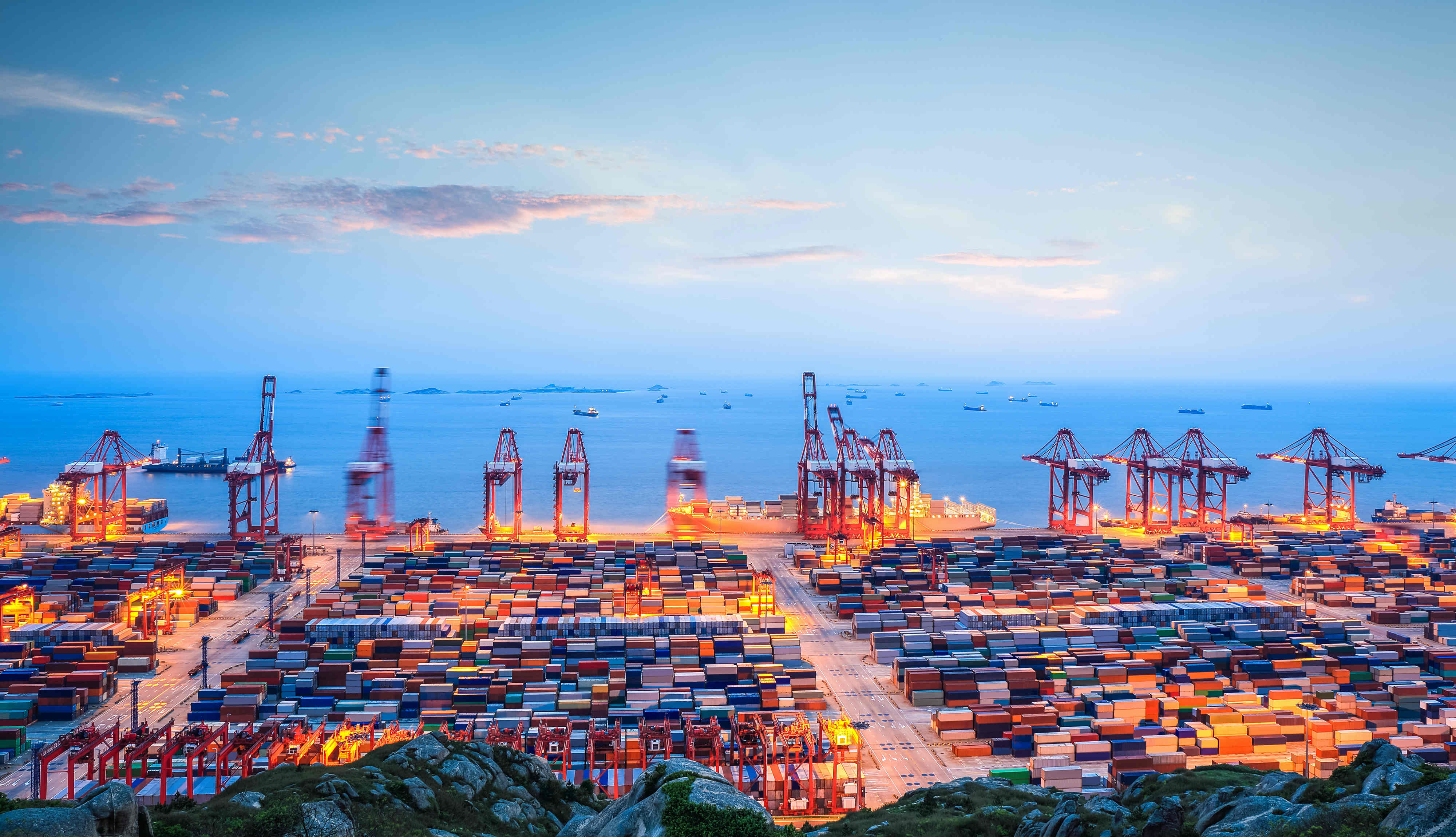
Where there are challenges, there are opportunities, and the spring of China's foreign exchange industry has arrived. Survey data show that in 2015 China's total exports reached approximately US$2.3 trillion and total imports approximately US$1.7 trillion, making it the world's largest exporter and second-largest importer. As China's economy develops, diverse foreign exchange demand — between individuals and enterprises, and between enterprises and international markets — is continuously rising. The foreign exchange industry will see explosive growth in areas such as global asset allocation, import and export trade, and cross-border investment and financing. As the trend of renminbi internationalization deepens further, market conditions characterized by large two-way exchange rate fluctuations will become the norm, and both individual and institutional foreign exchange investors should accept and keep pace with such changes.
Strengthening Foreign Exchange Management Soft Power — Important and Urgent
The economic miracle China has created since reform and opening up reflects strong hard power, yet it also continually faces severe challenges from latecomers. What adjustments and changes must Chinese entrepreneurs make to keep growing in the future? Analyzing a case study will make this clearer.
One Shenzhen e-commerce enterprise we serve has more than one thousand employees, five of whom manage finance, but not a single one dedicated full-time to managing foreign exchange. Yet this enterprise has an annual transaction volume of nearly one billion US dollars, uses more than eight currencies, and demands very rapid capital liquidity. The absence of foreign exchange management in Chinese enterprises is evidently widespread. As an important element of an enterprise's soft power, if foreign exchange management is lacking in international competition, the enterprise's imports, exports, and trade will be left in a state of open risk exposure!
Looking at the current state of global trade, China's import and export volume ranks among the world's highest. Over a 10-year window, the renminbi against the US dollar is already at a historically strong level, and future cyclical fluctuations are becoming increasingly pronounced. Behind cross-border trade lie the exchange rate relationships between the renminbi and the currencies of various countries. Along the Belt and Road alone, more than forty currencies are involved, and paying attention to the renminbi's movements against a basket of currencies other than the US dollar has become critically important.
If Chinese enterprises want to keep growing in the 21st century, they must not lose themselves in existing achievements. They must boldly invest in enterprise soft power — especially the soft power of foreign exchange trading and management, which is closely tied to foreign trade imports and exports. To connect directly with the foreign exchange and product price information generated by global markets, they need to further enhance their electronic and networked trading and risk-control capabilities. Taking territory relies on hard power, but securing the gains requires soft power. A clear-eyed recognition of the profound value and role of this soft power in enterprise foreign exchange management can create new momentum for our own enterprises and for the development of China's foreign trade imports and exports!
There Are No Shortcuts to Success — Taking Professionalism and Management to the Utmost
In the interview, Mr. Liu Xinnuo believes that, for a foreign exchange financial institution, we need to take professional management to the utmost in order to maintain an advantage in this field!
Mr. Liu Xinnuo in an exclusive interview with OneTV
As early as 2000, the KVB Kunlun International Group accurately anticipated two major macro trends — "the internationalization of the renminbi and the vigorous development of China's offshore financial markets" — and, with forward-looking vision, formulated a ten-year development strategy for the Group. In the blink of an eye, fifteen years have passed, and the outlook set at the turn of the century has all become reality. The Group has expanded its business to 4 countries and 6 international cities across three continents, achieving 24-hour global electronic trading, and successfully listed in Hong Kong in 2013 to become a leader in the foreign exchange industry. In January 2015, KVB Kunlun International brought in CITIC Securities as a strategic controlling shareholder, causing quite a stir in the global foreign exchange industry. In the interview, Mr. Liu Xinnuo also revealed the reasons behind the "alliance" between the two parties.
Globally listed foreign exchange financial institutions can be counted on one hand, with the few that exist concentrated mainly in the United States, the United Kingdom, and Japan. Hong Kong's listing mechanism is extremely stringent, yet in 2013 KVB Kunlun International, relying on its own strength, broke through numerous hurdles to become the first non-bank financial institution in the Greater China region to achieve a listing with foreign exchange trading as its core business. Possessing a fully proprietary trading system and treasury management solutions, along with listed status and a mature profit model, KVB Kunlun International — combining multiple advantages in one — hopes, after joining hands with CITIC, to achieve complementary strengths in market and business layout. This will enable the Group, amid the process of renminbi internationalization and in advancing the national strategy of the Belt and Road, to deliver a full range of products and services — from trading to management — to Chinese enterprises with foreign exchange business needs, helping them rapidly enhance their soft power in foreign exchange trading and management and achieve overtaking on the curve.
Firmly keeping pace with the motherland's economic development, closely linking the company's business to renminbi internationalization, and integrating financial products and services with the real economy, trade, and more cross-border trading enterprises to counter exchange rate risk — this is the goal and responsibility of KVB Kunlun International. Safeguarding the value of capital for more enterprises and making value-adding contributions is something the people of Kunlun are genuinely, wholeheartedly willing to do!
("First Reception Room" is renowned as a high-end personality interview program, having interviewed many Asia-Pacific political and business heavyweights and leading corporate figures, including Tung Chee-hwa, Hong Kong's first Chief Executive; Edmund Ho, Macau's first Chief Executive; and Jasper Tsang, President of the Hong Kong Legislative Council.)
